
Agricultural freight costs rise year-over-year in June but ease on key logistics corridors
Grain transportation rates closed June above the levels recorded in the same month of the previous year, according to data from Brazil's national supply agency Conab. However, some of the most important logistics corridors used to move crops to ports and processing hubs saw freight tariffs decline during the period. The mixed picture highlights the need for farmers to track route-specific freight costs when planning crop sales.
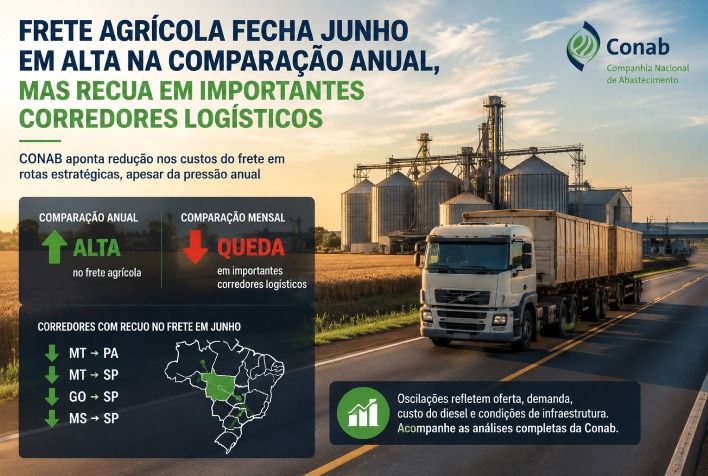
Conab's latest survey indicates that average freight costs for the agricultural sector were higher in June compared to a year earlier. Sustained pressure on transport prices reflects factors such as strong demand for trucks during the harvest and inter-harvest period, as well as ongoing operational cost burdens faced by carriers across the country.
Despite the overall annual increase, certain major corridors that are critical for moving soybeans, corn, and other commodities to export terminals recorded a pullback in rates. This localized easing may be linked to a temporary drop in cargo volumes in specific regions or a greater availability of truck drivers along those routes during the month.
For grain producers, the divergence between corridors underscores the value of monitoring freight quotes on a route-by-route basis before locking in sales contracts. Booking transport in advance and exploring multiple logistics options are practical measures that can help protect farm margins from elevated shipping costs.
Regularly consulting freight indices published by agencies such as Conab gives farmers a reliable benchmark to assess whether current conditions favor moving stored grain or waiting for more competitive transport rates to emerge in the market.
Original source
Read more at Portal do Agronegócio ↗Content based on a public source. Rights to the original article belong to the cited outlet.